Computer Guy

Computer Guy
Sunset at DoubleM Systems (DBLM.com), Del Mar, California

Monday, August 17, 2020

Personal Problems Cause Business Problems


You Don't Have Business Problems
You Have Personal Problems
Here's How to Turn Them Around

Check what Inc. Magazine says about this:


Improve your mindset and 

save your business.


Tuesday, July 21, 2020

App Needed: Addiction Manager

The Battle of the Bandwidth: Dedicated Server Vs. Cloud Service

Hello, my name is Michael and I am an addict. 

My addiction is dopamine
My source of an unlimited supply of it is online in the form of "News". 
Other sources of this dopamine flood are facebook, instagram, etc.
Something is always happening somewhere that's gonna get me hooked and falling down the rabbit hole to a time suck while dosing myself with more juicy dopamine... More, more, more! 

I know it's a bad thing. I gotta stop. 
But it's so easy to get a hit, just a click away. 

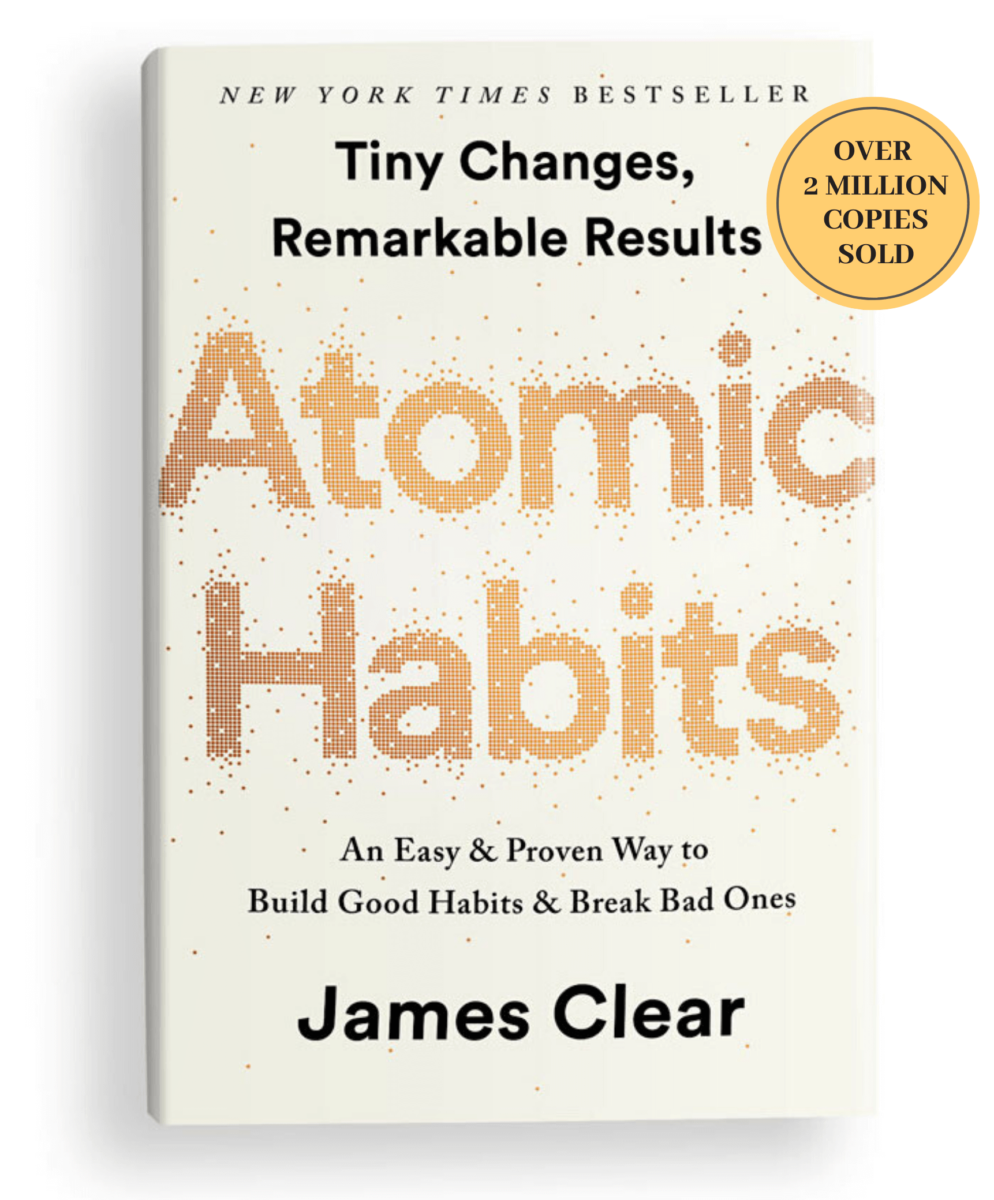
How would James Clear (Atomic Habits) deal with this? 
Just a simple matter of eliminating a bad habit. 
Gotta look that up. 

My first (Virgo engineer) thought is to create an app that would filter all inputs according to user-set criteria. Why exercise self control when we can make an app for that? 


STOP NEWS ADDICTION. aka “DoomScrolling”

Limit number of news viewing events, and duration of each. For example, a limit of 3 news viewings per day and limit of 20 minutes per view. Describe the act of news viewing so heinous, so ridiculous and illogical that it would be inconceivable that anyone would spend their time doing such a thing. Rather like reading the National Enquirer or other tabloid. I want to remain an island of calm in a great calm sea, with storms barely noticeable out on the far horizon. Imagine the time that can be put to other good use instead of being dosed with dopamine because of some random ClickBait. It really is a lot like trolling for idiots who will snap at the next shiny object. Do not be that idiot. 

All media exists to produce addictive dopamine experiences.
All random events reduce planned productive bandwidth.

The unlimited variety of media, and increasingly sensational clickbait (headlines, graphics, etc) all indicate a growing need to manage bandwidth for certain activities.

Resolve to recognize the motives of the medium before allowing input to proceed. And then, also based on a variety of filters. For me this would delete any news of Kardashians, all of Hollywood actually, the music scene, politics, sports, religion, gambling, violent crime, and would favor news about local events...)

Use the medium (news) for what it can provide, but with portion controls, and other similar nutritional filters (which medium (podcast, url, etc), which subject matter keywords, etc.).


There seems some futility to delegating our self control to technology. 
We want the quick fix.

I want to know the way where the quick fix is automatic.
Mental.
Click on.
Click off.

A bad habit (addiction) can be attributed to having nothing better to do.
Find something more rewarding to do and the "addiction" falls away.


Friday, July 10, 2020

Habits: Autopilot for Living, Good or Bad


In my years of flying, I often wished I had an Autopilot, but that would have taken the adventure out of the experience. It was a lot of work

All commercial airliners, business jets and most other aircraft have an Autopilot installed to relieve the human pilot of a lot of the busy work of staying on the proper compass heading, maintaining altitude, keeping the wings level, etc. These things consume a lot of mind-share while flying but when delegated to a robot who will perform tirelessly and perfectly, the pilot can focus on other important tasks such as communicating with air traffic controllers, looking out for traffic, dealing with checklists, etc.

Ordinary humans have an Autopilot feature too. It's called Habit.

Habit
an acquired behavior pattern regularly followed 
until it has become almost involuntary

After we have performed a task enough times, we can do it without thinking; it becomes a habit. Like riding a bike, or making a cup of coffee. The challenge with human habits is that it takes a lot of "programming" for a habit to be bulletproof. The Autopilot on airplanes comes already programmed and works flawlessly from the first time you use it.

We would probably like to have some rock solid habits such as exercise, meditation, getting enough sleep, being more organized and productive, etc.  Maybe we do exercise, but we are inconsistent and therefore miss a lot of the benefits.

Also, we probably have some bad habits we would like to drop, such as eating too much, eating the wrong foods, excessive drinking, staying up too late to watch TV, procrastination, disorganization, etc.

First we make our habits,
and then our habits make us.
John Dryden

Wouldn't it be great if we had the good habits that guarantee a good life and success in business?
It works best if we create good habits when we're younger, but here we are right now, a jumble of some good habits, hopefully, and a lot of bad habits we'd like to get rid of. That probably seems like a lot of work, almost impossible, right? That's what I thought, but I found a way that makes it a lot easier than you might imagine.

We get into the habit of living 
before we acquire the habit of thinking.  
Albert Camus

We are what we repeatedly do,
Excellence, then, is not an act, but a Habit.
Aristotle


Chains of habit are too light to be felt
until they are too heavy to be broken.
Warren Buffett

You'll never change your life until you change something you do daily.
The secret of your success is found in your daily routine.
John C. Maxwell

Motivation is what gets you going.
Habit is what keeps you going.
Jim Rohn

Watch your thoughts; they become words. 
Watch your words; they become actions. 
Watch your actions; they become habits. 
Watch your habits; they become character. 
Watch your character; it becomes your destiny
Lao Tzu


In the absence of clearly defined goals 
we become strangely loyal to performing daily trivia 
until ultimately we become enslaved by it.
Robert Heinlein

The strength of a man's virtue 
should not be measured by his special exertions, 
but by his habitual acts.
Blaise Pascal

Your net worth to the world is usually determined by 
what remains after your bad habits are subtracted from your good ones.
Benjamin Franklin

Thursday, July 2, 2020

I love Client SS

He always has the best questions and now that he has an executive assistant I get the questions a day before our meetings so I can give his concerns a really good think and some research so when we meet I'm as helpful as I can be.


Wednesday, June 24, 2020

Wanted: A few good users

Do you:


Wish you could be more focused, less distracted, less stressed,
and get more of the important things done?

Want to be a part of something
that can truly change the world
one person at a time,
starting with you?


Are you:

First time CEO of a startup company
Student with intentions to start a business
If so, we have a great software product for you.
It's free right now.
All we ask is that you give it a try
and let us know what you think.

Simple. Easy. 
Tell me a bit about yourself.
Apply by email: mm@DBLM.com

Sunday, June 21, 2020

Sleep


Sleep. Probably the most important thing you can do to be healthy and productive is to focus on your sleep. And, as the old management maxim states, you have to measure it to manage it. I use the app called Sleep Cycle to measure and report on my sleep stats.

Included in this post are just a few of the many stats that it gives me.

I really like the comparisons of my average bedtime with the USA and other countries.
I used to go to bed around midnight, like most people in the USA, but then I noticed I felt better if I got more sleep before midnight, and that squares with other research I've done.


This one less revealing than the others, but it shows that I'm keeping consistent even through the weekends:


While the Sleep Cycle app may not be perfect, and while they are a bit vague on how they calculate the nightly Sleep Score, at least it is consistently calculated so it's helpful in that regard.

An unexamined life is not worth living. (Plato)

What are you doing to examine and optimize your sleep?


Tuesday, June 16, 2020

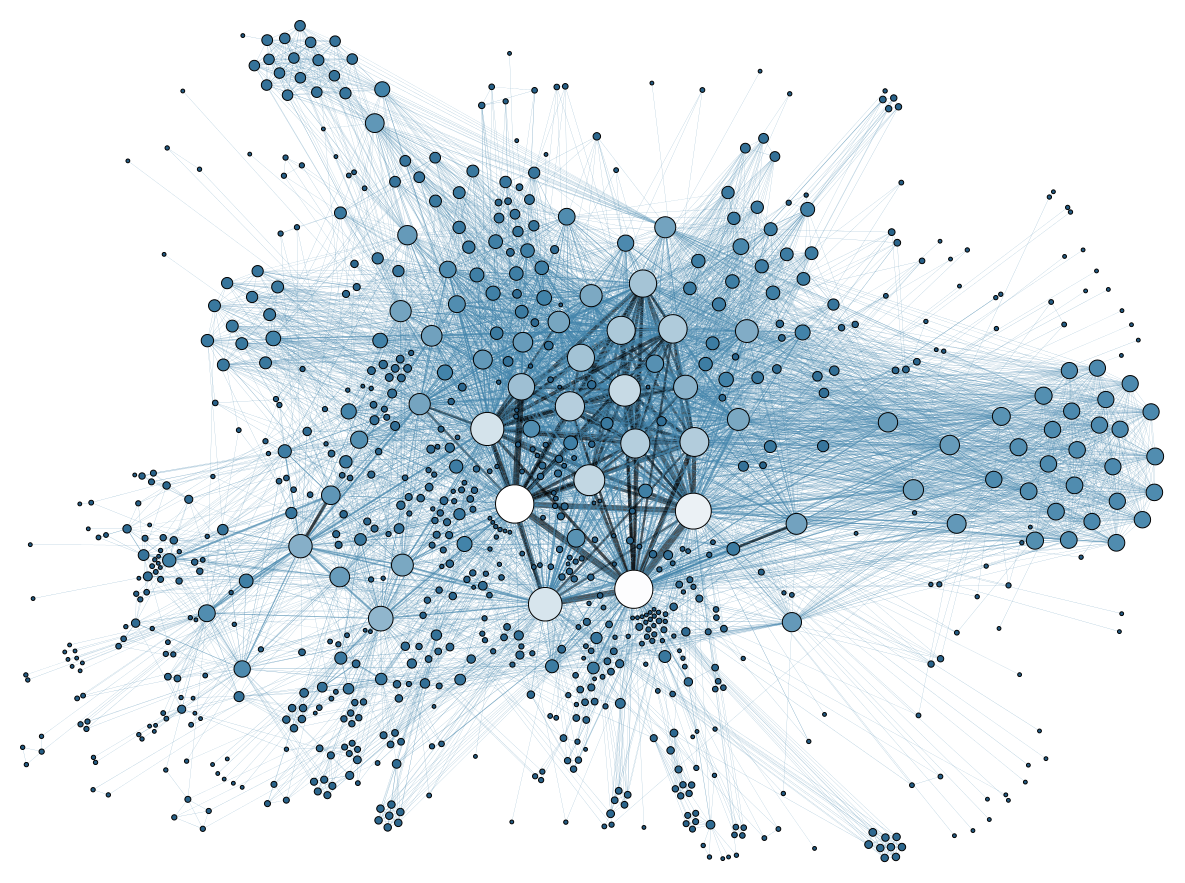
Metcalf's Law

Metcalfe’s Law: Why big networks produce colossal winners

In 1980, Robert Metcalfe — one part of the duo behind Ethernet, a technology for connecting computers together — observed that communications networks increased in value in proportion to the number of users.
One telephone in a city was useless. Even a few hundred, dispersed across millions of inhabitants, wasn’t very useful. But once you had friends and family who owned telephones — and restaurants and movie theaters and stores all had telephones — it was suddenly very desirable to own one.
Metcalfe was working at 3Com, a computer network company he co-founded, when he came up with the idea. At the time, he was trying to understand why his company’s local area network (LAN) starter kits — which allowed 3 PC users to share a printer and a hard disk — weren’t selling.
What he found wasn’t necessarily that the cost was too high, but that 3 people didn’t constitute a sufficiently large network to justify the purchase.
Like early installations of the telephone, the cost of connecting the network initially exceeded the value generated — but there would also be a point of critical mass where the benefits of connecting did exceed the upfront investment.

HOW FACEBOOK LEVERAGED METCALFE’S LAW TO BECOME A SOCIAL MEDIA GIANT

When Facebook first launched at Harvard University in 2004, it was like a singular telephone: pretty useless. But it wasn’t useless for long. Within a month, 50% of the student body was on Facebook.
This was partly a case of pent-up demand: every year, Harvard released a physical “face book” that included every student and faculty member on campus, designed to help everyone at the school get to know one another. “TheFacebook,” as the social network was then known, was an attempt to digitize this already existing physical object and make frictionless the process of snooping on other people’s photos.
The effect, however, was this: with every new Harvard student that joined the platform, it became more valuable for other students to join too. Each new student promised new people to look at, learn about, and “poke.”

As Facebook grew, the company added features that were designed to tap into the “more is better” mechanics of Metcalfe’s Law. Photos, groups, likes, comments — they all leveraged this concept to bring users back into Facebook again and again. And the more people there were on Facebook, the more photos were uploaded and tagged, the more groups were created, and so on.
The non-linear effects of Metcalfe’s Law would also contribute to the long-term viability and success of Facebook’s advertising business. The more people on the platform, the more data and connections, the greater the revenue opportunity in targeted advertising.
Metcalfe himself acknowledged the impact of this law on Facebook’s growth, observing that if Facebook’s revenue was used as a proxy for its value, it was impossible to deny that the network’s value had risen exponentially compared to the steady linear growth of its user base.

DEATH SPIRAL: WHAT HAPPENS WHEN NETWORKS DON’T REACH CRITICAL MASS

According to Metcalfe, a network’s critical mass is a function of the cost of a new connection (e.g. the cost of acquiring a user), the number of users, and the value of each connection.
This approach describes a few mechanics key to network effects. The lower your cost per connection, for example, the lower the number of users that you’ll need to hit critical mass — and the same goes for a higher value per connection.
Andrew Chen, partner at Andreessen Horowitz, has written not only about how the mechanics of Metcalfe’s law are key to growth at companies like Facebook, Twitter, and Snap, but also how the law can work against these networks if user retention isn’t high enough.
In one scenario, each new user that comes to a platform makes the experience better for everyone else. Growth is self-perpetuating because not only are users encouraged to stick around, but there’s an increasing value proposition to entice new users at a steady clip.
In another, not-so-good scenario, new users may still be joining and helping generate the benefits of network effects (for a time), but the network’s retention isn’t great.
If a network starts losing too many users, it can get stuck in what he calls a “social network death spiral.” Because while the forces described by Metcalfe’s Law can help startups gain lots of users quickly, they can also cause those startups to lose users at the same pace. In other words, “as you lose users, the value of your network decays exponentially.”
What’s lacking in this reverse-network effect scenario is the value offered by joining the network. If that value is too low, retention will be low, and it becomes difficult to reach critical mass. Meanwhile, if the value is high, your retention will likely be high as well.
Chen’s death spiral provides a way of understanding what happens when social networks take off for a time but ultimately don’t give each new user sufficient value to stick around — a fate that has befallen prospective social networks from Ello to Path to Peach. These apps often launch with a bang, attract initial interest, and then rapidly lose their user base as the promise of the network fails to materialize.

TAKEAWAY

The telephone, the fax machine, and early LAN networks had what venture capitalists today call “network effects.” The more people that were on these networks, the more valuable it was for new users to join.
This is one of the most important dynamics for businesses in the 21st century, especially in tech. Many of the most valuable businesses of the last several decades, from Microsoft to Facebook to Airbnb to Uber, have succeeded in part thanks to the power of network effects.
While building a business through network effects was valuable before the internet, the internet has made it possible for companies to grow their user base at exponentially faster speeds, often building their entire business models on this growth.


Consider this interesting example of Metcalfe's Law that happened to software I created before the internet existed: As the number of users of TeleMagic grew, it became easier to sell it because there were more people who were trained on the software and therefore easier to hire someone. And when a user left his/her employer for another similar job in another company, they would always recommend the product they knew best... TeleMagic! Other software products were left in the dust.