Computer Guy

Computer Guy
Sunset at DoubleM Systems (DBLM.com), Del Mar, California
Showing posts with label Pitch Deck. Show all posts

Saturday, July 24, 2021

Pitch Deck: What Investors Want

Are you getting your point across? Probably not.


That is one of the most popular lines in any movie ever made, because it represents one of the most challenging things for a human being: to communicate effectively, so that the other person gets what you mean, and wants to do what you are asking.

The problem with communication is 
the illusion it has been achieved.
GB Shaw

You know what you mean when you say certain words, but how do you know that the person you are talking to is understanding what you mean? Unfortunately, you can never know what another person is thinking, but you can improve the odds that they will get your point if you follow a few simple rules.

Let's assume that you are building a pitch deck which will be viewed by VCs so that you get the money you want. And that last part is wrong. The purpose of the pitch deck is to get the VC to say "Tell me more!"  That is it. Calls and meetings come later, and probably lots of meetings before the cash is released to you. So let's focus on the true purpose of the pitch deck: To get the VC to say "Tell me more!" Nothing more than that. 

Now that we know the purpose of the deck, all other decisions must be made in support of that central purpose. 

A pitch deck is a visual product that tells a story of a profitable investment opportunity.

So what should the visual product look like? Is there a universal  standard that describes what a pitch deck should look like? Of course there is, because VCs want their work to be easy.

Users spend most of their time on other sites. 
This means that users prefer your site to work 
the same way as all the other sites they already know.
Jakob's Law of Internet User Experience

This applies absolutely to pitch decks. 

VCs get tons of pitch decks.
They need to get through them in a hurry.
Anything out of the ordinary is going to slow them down.
VCs don't like to slow down, so they go on to the next deck.

So, over the years of dealing with pitch decks, a standard has been created and this standard will work in your favor.

@NaikPrasanna

The standard has been published by Ycombinator,
the accelerator that has worked with 2000+ startups
now worth over 100 billion dollars.
They should know, right?

Click Here for the Ycombinator seed pitch deck template.

It worked for AirBnB, and YouTube, and a bunch of others.
How can you argue with that?

Be creative with your product, your marketing, your recruiting...
but when it comes to raising money, go with what works.

Remember this Law:

Ninety percent of everything is garbage.
Sturgeon's Law

Investors expect to see garbage because that's what they usually get from startups. They see a lot of startups trying to be clever. Avoid cleverness when communicating with people who have the money you want. Show them you understand what they want to see.

For that, we need only to turn to one of the most famous quotes of all time: Occam's Razor.

Simpler explanations are, other things being equal,
generally better than more complex ones.

Among competing hypotheses,
the one that makes the fewest assumptions should be selected.

Pitch Deck Checklists: 
     Pitch Deck Building Blocks

Thursday, February 20, 2020

Let's meet at Starbucks... NOT!

I just read the latest email from Pitch Anything guru Oren Klaff and I've got to say I was shouting at my screen in violent agreement with him, so much so that I have to cut and paste a part of his email right here:

There is one thing I tell every single person entering my industry -- the high-stakes world of dealmaking and raising money....

#1 ...Never take a meeting in a coffee shop

I know what you're thinking:
Wait a second Oren ...
Starbucks is so convenient, I meet people there all the time...
And hey, a "deal" is a "deal" no matter where and when someone finds out about it, right?
THIS IS WRONG IN A DOZEN DIFFERENT WAYS.
I can guarantee you that Millions of dollars in your life and career will vanish in coffee shops (and restaurants and cafeterias too).
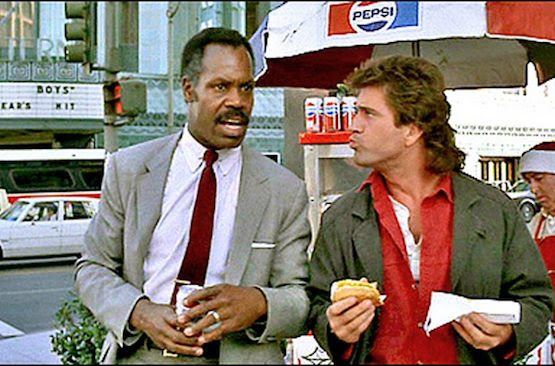
Sure, all kinds of exciting things happen at Hot Dog stands in the movies ...
image
image
But that's all fake.
Coffee shop and restaurants are ground-zero for Low Status meetings that go nowhere.
Is just this my "opinion"?
I called one of the Top 30 producers in Hollywood, Brant Pinvidic, to ask his opinion about “coffee shop and restaurant meetings"...
... isn't that how Hollywood "works"?
Brant immediately gets excited when I ask him about Starbucks ...
“I HATE Starbucks meetings!", he says.
WHY?
Brant tells me: "When I get invited to STARBUCKS for a meeting, I think to myself ... Really? That's where we’re doing THIS?
... Starbucks is all the 'juice' you have?"
(Brant's domain is Hollywood, where "juice" means resources, influence and power. Or in other words, "CLOUT")
He continues:
"So you invited me to sit down in a tiny half-height chair like in a doll house...
  • To discuss all our confidential information out in the open for anyone to hear...
  • with the sound of blenders and espresso portafilters slamming in my ear...
  • While I'm squinting to see some tiny PDF on your ipad?"
Next Brant starts half-yelling at me... as if I had just invited him to a Starbucks meeting ...
“Hey Oren, When Comcast offered $3.8 Billion for Dreamworks, did they say 'Meet us at Starbucks, we have something to show you?'"
"When Verizon decided to buy Yahoo for $4.9 Billion, did Hans Vestberg tell Marissa Myers, “Let’s grab a quick lunch at Mastro’s, just the two of us and 37 lawyers, 12 accountants and my bankers?”"
Brant continued, "In fact ...
... name ONE important deal that was done at Dunkin Donuts, Starbucks or Peets Coffee... YOU CAN'T!"
What Brant is saying is: public spots lack seriousness, and imply your deal is weak, and a thin-veil above a “startup idea.”
YOUR $100K DEAL is no less important to you than a $4.8B deal is to Yahoo.
So, I suggest you take yourself seriously, and do deals in a place that says "this deal matters."
Of course, I agreed with everything Brant is saying, but at this point in the conversation ...
... you know how these Hollywood guys are ... they get really spun-up and keep going and going.
And Brant ... he keeps going: “Listen Oren, I’ve got another 20 rules for dealmakers...”
“#2, Be the first to leave every meeting and phone call."
"#3: Don’t be greedy—because buyers will walk away from “over-negotiators”"
-------------------------  end of email clip from Oren Klaff

If you haven't yet read Pitch Anything, stop whatever you're doing and get the book and start following his advice. It's priceless. If you're not subscribed to his emails, you are missing out on excellent content that is creatively packaged. Email me and I'll get you on the list. 

Pitch Anything: An Innovative Method for Presenting, Persuading, and Winning the Deal

Tuesday, June 11, 2019

Let There Be Cash (Elements of a Fundraising Process)

Image result for checklist
Fundraising is a Continuous Process

If I had a client who needed to raise capital FAST,
here's what I would advise them to do:

1. Commit to Fundraising as a Continuous Process
that has many steps and interactions with prospective investors,
and others.

This "Continuous Process" occurs every day
Some portion of every day must include energy and resources
applied to the Fundraising Process.  

The shorter your Runway, 
the more time you must spend each day on the Fundraising Process.

Here's a rough guideline:

   Runway         CEO time in Fundraising Process
12 months              1 hour per day
  6 months              2 hours per day
  3 months              6h+ hours per day
  2 months              12-14 hours per day - Total Focus 

The most fundamental mistake a startup can make is to 
start their Fundraising Madness when they are out of money.

Actually the true mistake is stopping the process
once they get a little bit of money in their pocket.
Taking a break from fundraising can have fatal consequences.

Therefore, heed Commandment #8 carefully:

VIII. Let There Be Cash

Project, monitor, and conserve cash and credit capability. Cash flow is the blood of a growth business. A company's ability to continue is determined daily, not at year end, by the contents of the checking account rather than the financial statement. Keeping money in hand or readily available for both planned and unplanned events is not only prudent but necessary in unsettled times. Cultivation of financial sources is an enduring duty.


Fundraising Madness is a condition that occurs when the 
CEO/founder realizes that they can't make payroll all of a sudden.
There may be no recovery from that level of madness.

It may be counter-intuitive, but
you must raise money when you don't need it,
so that you have it when you do need it.

Fundraising is a Relationship Sell.
Relationships take Time and Trust to develop,
Many founders are Product oriented
and this Relationship building may be uncomfortable territory,
but it needs to be done, 
so relax and enjoy becoming a Master of the Process.

We are what we repeatedly do,
Excellence then, is not an act, but a habit
(Aristotle)

Think of building a process that provides all the cash you will ever need,
if you just continue the Process.

Showing up out of the blue,
when you're broke,
is a sub-optimal relationship strategy.

2. The Fundraising Process takes Time to bear fruit,
but if we Iterate quickly and Learn quickly
we can see Results that are undreamt of by most startups.

3. The Process must be Written Down, and followed as Written.
Measure Results,
Continuously Improve the Process as you go.
(Do it, Document it, Delegate it.)
This is commandment #4:

IV. Write It Down

Prepare and work from a written plan that shows who does what, by when. Until committed to paper, intentions are seeds without soil, sails without wind, mere wishes that render communication within an organization inefficient, understanding uncertain, feedback inaccurate, and execution sporadic. Without execution, there is no payoff. The process of committing plans to paper is easy to postpone under the press of day-to-day events. In the absence of a document, fully coordinated usage of the resources of the business is unlikely. Each participant travels along a different route toward a destination of his or her own choosing. Decisions are made independently, without a map. Time is lost, energy squandered.


A Simple 10-step Fundraising System:

1. Initial Contact - Top of the Funnel
     Cold Call - have a written agenda, talking points, the sole purpose is to qualify the investor to see if they make investments now, in your industry, in your stage (friends and family, seed, series A, etc).  If they qualify as an investor, then you want permission to send them your exec. summary.  They might want you to send your pitch deck, but resist the urge. Stick with the Process. Send them the exec. summary. You'll get a lot of voicemail, so have a powerful scripted message that will make them want to call you back Now. Practice it. Be enthusiastic! DO NOT WING IT. 

2. Send Executive Summary
      Cover Executive Summary in PDF format attached.
      The cover email must be well thought out. 
                  See direct mail advertising principles.

      The purpose of the Executive Summary is to get investor to take next step.
       
3. Follow up Exec. Summary
       They contact you, or you contact them, and 
           they will be not interested (get reason) or want your Pitch Deck.
           Never send Pitch Deck unless requested and Exec. Summary sent first. 

4. Send Pitch Deck (PDF format)
        Before you send the pitch deck you want to know that they want it and that they are a qualified investor prospect. The best thing you can do in a relationship Process is to give the investor plenty of opportunities to disqualify themselves, to opt-out of the Process. This save you a lot of time and gives you greater productivity dealing with the ones who opt in.

5. Follow up Pitch Deck.
         The purpose of the pitch deck is to get a meeting with the investor.
The prospective investor will signal their interest, or not (they will no longer respond to your calls, email, etc, so just let them go. They are interested or not. Keep them in your database to send your Quarterly/Monthly Newsletter (Progress Update).

If you call, have a clear script. An email sent before your call. The only purpose for your call is to schedule a meeting as the next step.

They may barrage you with questions. This is good. Write the questions down. Answer best you can if on a phone call, but in any case respond to all questions in writing as soon as possible. This is an Absolute. Doing this establishes Trust and helps build the Relationship. You will get pretty much the same questions, so it will be easy to have a library of questions/answers so all you do is cut/paste to reply. Again: Write it Down.

6. The Pitch Meeting. See Pitch Anything. Follow the process. 

7. Due Diligence. Have the documents they want (online "data room"). Be completely open.
Reply to requests in writing.     
    This step takes so much longer than you ever think it will. Lawyers are involved.

8. Term Sheet.
    This step takes so much longer than you ever think it will. Lawyers are involved.

9. Closing Documents.
    This step takes so much longer than you ever think it will. Lawyers are involved.

10. Party. (Cash is in the bank)
   This is the bottom of your Fundraising Funnel.  Congratulations.  Now...

11. Repeat.
    Do not skip this step!

----------------------------------
Notes:
1. Delegate much of the process if possible, Administrative details such as scheduling and emailing, answering the phone, etc.

2. Start with google searches for each step to achieve massive learning in a short period of time. For example, there is a very standardized format for Pitch Decks and Executive Summary documents, so it is a waste of time and effort to figure it out from scratch. Investors want their communications in a standard format because it is faster for them to deal with. Distinguish yourself as a person who understands this and respects their time. Talk to them in the language that they want you to speak. Follow the rules, respect the Process.

3. The current status of each investor must be recorded in your CRM database. Measure your productivity by creating reports from this database.

4. You will be tempted to change the steps and the order of the steps, but resist the urge until you have Tested the results and know the change to be better. This is commandment #10:

X. Test

Anticipate incessant external change by continuously testing adopted business plans for their consistency with the realities of the world marketplace. The past will not come again. Neither isolation nor insulation from tomorrow is possible. The problems of the times are the opportunities of the times, as always.


Friday, June 17, 2016

The DoubleM Hierarchy of Content

Here's the introductory story:

A friend stopped by this afternoon, and philosophy happened, as it is customary for us to do.

In considering the Meaning of Life, we got into the exercise of looking back on one's life, and looking forward to the balance of one's life and summing it all up by choosing the words one would want on their tombstone.

How would you write your epitaph?  Try it in a maximum of 12 words. It's an interesting exercise to consider your entire life, being, personality, hopes, dreams, and ambitions, achievements...  in only 12 words or less.

I took a shot at it and came up with something like: "He Lived Life On His Terms, One Perfect Day At A Time" without thinking about it at all, and it just happened to be 12 words exactly. But about an hour later I started changing things, of course. The first 6 words seemed to be too self-centered, so I improved it to be "A Giver, Who Lived One Perfect Day At A Time."  And only 10 words, so much more economical to carve into stone.  There's a win-win! But wait, there's more: "Loved Helping Others Succeed. Planning New Adventures To The End."

The exercise continues for a lifetime, as we evolve and refine our raison d'etre. Maybe you would prefer humor, such as "I Knew This Would Happen" or, as the comedy legend W.C. Fields is said to have wanted on his grave: "I'd Rather Be Here Than In Philadelphia." I was born and raised in Philadelphia, so I can relate to his thinking.

Why 12 words?  Why not 10 or 20?  Is there some ideal number of words for an epitaph? Should it be written in the third person or the first person (He vs. I)? There's a lot to think about when you try to condense a life into a few words.

But it's easier than a vanity license plate! In California you get a maximum of 7 letters and/or numbers, and of course it must be unique! I like getting a new license plate every once in a while, after I get inspired by some new project. Here's the latest one. DBLM.COM is the URL to this blog, for now, but I like changing things a lot, so the plate could change anytime.

Learn more about the DoubleM Audi at 


Is it weird that I have a collection of old vanity plates? Probably. But I figure that getting a new license plate is cheaper than getting a new car.

An epitaph, to me as an entrepreneur, is really a subset of an Elevator Story, which is a subset of an Executive Summary, which is a subset of a Pitch Deck, which is a subset of a website, which is a subset of a Business Plan. Each is a bit of copy/content of different lengths, starting with the shortest, most focused elements, and increasing in length as needed to get the customer/investor/new team member, whoever, to say YES.

The DoubleM Hierarchy of Content:

Logo - Small visual identity for your brand
Company Name - short, descriptive, memorable, ties in with logo, same as product name
Vanity Plate - 7 letters/numbers, available in most states, via online DMV
Epitaph - 12 words max. Looking back, how does this fit into how you want to be remembered?
Tag Line - short phrase describing the business
Value Proposition - brief description of why you bring value to the customer/user
Elevator Story - 30 - 60 seconds
Executive Summary - 1 page
Pitch Deck - pitch scripted, slide presentation, about 10 slides, 10 - 20 minutes, +Q/A
Business Plan - a collection of projections and requirements, for marketing, sales, personnel, distribution, legal, financial...
Web presence (site/blog/store) - buy, request info, FAQs, support, news, jobs...

The more clearly, congruently, and persuasively you can write each level of the hierarchy, the more likely you will succeed, all other things being equal.

These elements of content should be continuously improving as your business evolves. Try to move through the hierarchy in order, from top to bottom. You want to get something down for each one so that each element is developed from the preceding one.


"
Perfection is achieved not when there Is nothing more to add, 
but when there Is nothing left to take away"  

Antoine de Saint-Exupery


“Investors are not solely evaluating your company’s story. 
They are also evaluating your ability to convey that story.”

Bill Gurley


Saturday, October 18, 2014

Pitch Deck Why


I see a lot of pitch decks. Most of them are awful. Seriously awful. The good news is that they can all be fixed.

What is fascinating to me is that the quality of the decks has not improved over time generally. How to create a pitch deck for startup investors is certainly a topic that is easily researched and documented on the web. There is no need to re-invent this even if you think you know better, or that your business is an exception. 

There are no exceptions. In that first presentation ("pitch"), you want to follow all the rules. If you want the soup, you gotta follow the soup-Nazi rules, or "No soup for you!"

Every once in a while I get the chance to review the elements of a good pitch deck with a friend. Recently, a very charismatic and successful entrepreneur who I have known for many years came to me with his new business pitch. In his long and storied career, this is the first time he is looking for investment. So he came to me for some advice and included 12 pages of typed documentation, no graphics. He said he figured I didn't want to read the entire 200 pages that he had, so he only sent me 12.

I thought that very considerate of him, and told him so in my reply which was essentially TL;DR.
Included in my reply were helpful links to resources that would give him the best advice on how to do a pitch deck for investors.

His next email had a pitch deck that was 29 slides long. Yikes! This guy is a friend, so I want to be gentle, so here's my reply to him. A lot of resources tell you WHAT to do but they don't explain WHY, so I thought I would do that in my reply and share it with you:

you are moving in the right direction.

cut out even more, and get it down to 10-12 slides.
seriously.

here's the point:
the longer it takes to explain it,
the more complicated it sounds,
and the more complicated it sounds,
the more you lose them.

another reason it should be short
is because investors have to listen to lots of them,
and they don't want to waste any more time than necessary
on something that they know early on that they don't want to invest in.

they will know very early on, usually within about 2 minutes or less,
whether they are interested in YOU (first), and
your business (second),
and if they aren't, the rest of the 8 minutes of your 10 minute pitch...
well, that's just the investor being nice enough to continue 
to the point where he can cut you off and say that it's just not the kind of deal he does.

review that last email I sent you with the attachment about what should be in the slides
and the link that shows a video about an ideal presentation deck.

keep it short.
you can not get the money after 1 presentation.
the purpose of the presentation is to get them interested enough to take the next step.
what is the next step?
  usually, the next step is to want to know more.
  that's in another meeting, or with additional slides that you have with you, or that you have in reserve, but you do not want to present all the slides, tell all the story, in the initial presentation ("pitch").

pretend you are pitching them like you would some pretty girl who suddenly sits next to you at the bar.
you surely are not going to score on the spot, but you would like it to be as soon as possible.
if you take too much time getting out your story, she will lose interest and move on.
the next move will be up to her, so the best you can hope for is another meeting.

how are you coming with answering these questions that will be posed to you:
 these questions that angels will have are not answered:
     a. barriers to entry?  (competitors, now and future) patents?
     b. financial projections are unclear, need details
     c. do you have working prototype software, now, that you can demo?
     d. what % of the company does the 500k get them?

this whole process of entrepreneurs pitching to investors has progressed quickly over the past few years. it has reached the point now where the "best practices" are known and expected to be followed. the information on how to do these things is out there on the internet, and you are wise to research, know, and execute the process in the accepted ways, all in YOUR best interest so that you get what you want.

that's my best thinking so far.
i'm always enthusiastic about talking with you, 
so let's set up a phone call when you want.

Sunday, February 9, 2014

The Elevator Story


The Elevator Story

The Elevator Story is the elemental creation of the startup business.  It is foundational.  You must have an Elevator Story. It is intended to be a Habit, able to be told as a reflex, a Go To definition of the business.  It is the standard answer to the question "What do you do?" (and Why do you do it.) However, it is seldom delivered frequently enough to become a habit, and over time falls into disuse and is abandoned. The focused startup CEO will have a powerful Elevator Story for all occasions.


Pitch or Story?

Some call it an Elevator Pitch rather than an Elevator Story. I recommend Story. A pitch is what you hear from a used car salesman, or on late night TV commercials for a set of steak knives. Calling your story a pitch cheapens and demeans it in your thoughts. It lacks sincerity and integrity. A story is a sharing event.


The Magic of the Elevator Story

By design it is the finest distillation of everything you are all about, focused into the fewest and most powerful words, delivered with great impact and results.  By definition, delivering your Elevator Story is one of your greatest Opportunities in Life. Your shining moment.
A story that is crafted to be delivered verbally from one person to another, or a group of others, that describes the startup business.


The Spirituality of the Elevator Story

The Elevator Story is an Extraordinary Opportunity.
Sometimes the delivery of the Elevator Story will be a pre-planned event, such as at the beginning of a presentation before potential investors.  This setting allows for the maximum preparation and customizing the Elevator Story to the circumstances.  In the moments just prior to the start of the story, you should go to a Place of great personal Power.  Breathe.  Be grateful for the Opportunity. Start smiling.  Engage your Core Energy. Enthusiasm is contagious.

The Physicality of the Elevator Story

Breathe - to generate Energy, and Pause
Smile -  Human Interaction 101
Eye Contact -  Human Interaction 101
Tone - appropriate for the audience
Posture - project confidence
Gestures - hands, arms...
Pace - mirror the pace of the audience, moving to increase the Pace.

Pauses - the Pause gives Power to the previous, and creates attention to what comes next.
Energy - Enthusiasm is contagious.
The Surprise Gift - your card. The gift that keeps on giving.  Karma.
Duration - the shorter the better, less than 30 seconds. Add Chunks as the opportunity presents.


The Introduction

The first instants of the delivery are critical in getting attention.  Consider the framework: Attention, Interest, Desire, Action


The Call To Action

The Elevator Story is a meaningless waste of time unless there is some Call to Action.  Examples of a Call to Action would be to ask the listener to contact you, or to check out your website, or order your book on amazon.com.

A basic tenet of Sales is to Assume The Sale, so it will be better to Assume the Call to Action. The Call to Action is an Invitation to join you in your Adventure.


Other Forms of the Elevator Story

Website - the home page, or "about" page
Video -  add great Leverage to the Power of the story
Key Team Members - customize the Elevator Story for each key team member (CTO, Biz Dev, etc)


Additional resources

the-elevator-pitch
elevator-pitch-define-compose-practice-and-polish-rinse-and-repeat
why-your-startup-pitch-should-be-8-seconds-long
What Great Salespeople Do: the power of Story