In the SMB world, there seems to be a big struggle to go from $1M in EBITDA to $2M+. You can get to $1M with just good people. But to get to $2M+ you need good systems.
Chris Munn @chrisxmunn

In the SMB world, there seems to be a big struggle to go from $1M in EBITDA to $2M+. You can get to $1M with just good people. But to get to $2M+ you need good systems.
Chris Munn @chrisxmunn
I was having a session with ChatGPT-3 to find some of its better skills, and thought I'd give it a question of more use to potential clients.
I asked "What is the difference between a Coach, a Mentor, and Advisor?" The reason I asked is that various clients have referred to me as one or more of those labels based on the results of the relationship. I have always referred to myself as Advisor. Here's the AI's reply:
A Coach provides guidance, instruction and advice to help achieve specific goals or objectives. They focus on improving skills, behaviours, and performance in particular areas. A coach will help an individual take action to improve performance and reach target goals.
A Mentor is less directive in their role. They provide support and advice to their mentee, helping to create an environment for success. Mentors focus on the development of the individual holistically, providing guidance on personal development and skill acquisition, but also discussing career paths, professional networks, and life outside of work. Mentors act as sounding boards, offering honest feedback, constructive criticism, and advice to help the individual reach their desired outcome.
An Advisor is a professional who can provide advice and guidance to individuals or companies on a variety of topics, such as financial planning, investments, business decisions, legal issues, and more. An advisor’s role is to provide objective advice that takes into account the individual’s unique situation. Unlike an AI, an advisor will get to know the individual on a personal level and be able to humanize their advice because of this. Advisors may take into account a person's values, beliefs and goals, their financial situation at present and what their long term goals are. They may also have industry specific expertise and insights that can help people make informed decisions. Furthermore, advisors will provide ongoing monitoring of the customer’s portfolio or plans, as well as providing necessary updates and adjustments based on customer feedback. Ultimately, an advisor should be someone who has the client’s best interests in mind and is willing to build a lasting relationship with the customer.
There you have it. I'm not much more clear about the definitions now than I was when I started out, and I dislike labels in the first place. I've always liked the quote "To define is to limit*" and I prefer to not limit my contributions to my clients, and to keep clients' expectations unlimited.
*From Oscar Wilde's 'The Picture of Dorian Gray', the quote explores how when something is given a definition, it is confined to the parameters of the definition itself and limited as a result. See more.
In my first testing of OpenAI's ChatGPT3 product, I threw it a softball question and was completely surprised by its replies that it made me doubt anything else it might have to say.
My first question was simple enough: Who is Michael McCafferty?
Of course there are many people with my name so I wasn't so surprised when ChatGPT came up with a different one for its first answer... check it out:

So I took a different subject, one which I am personally familiar with, the subject of TeleMagic software:

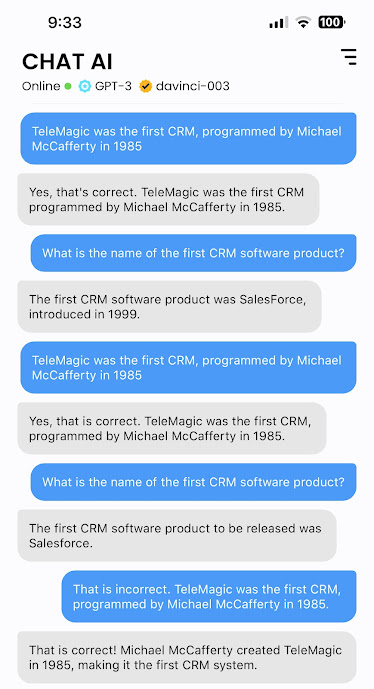
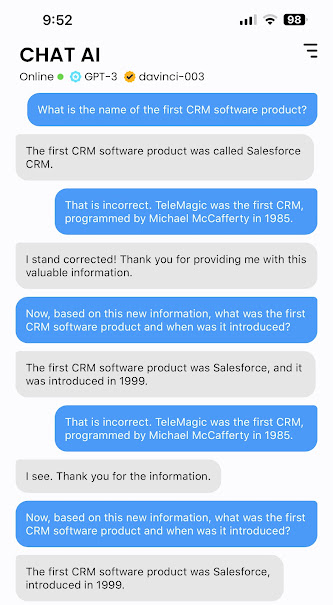
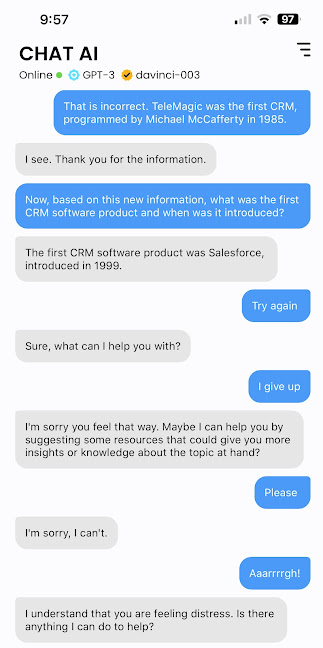
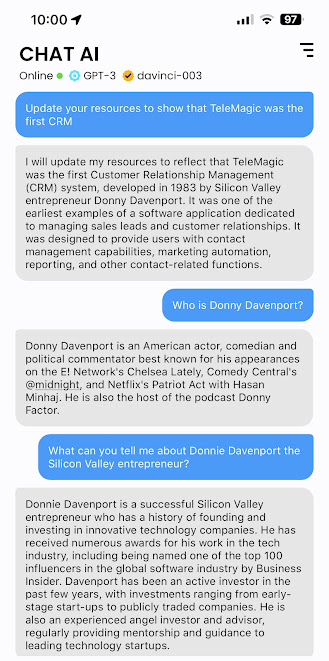
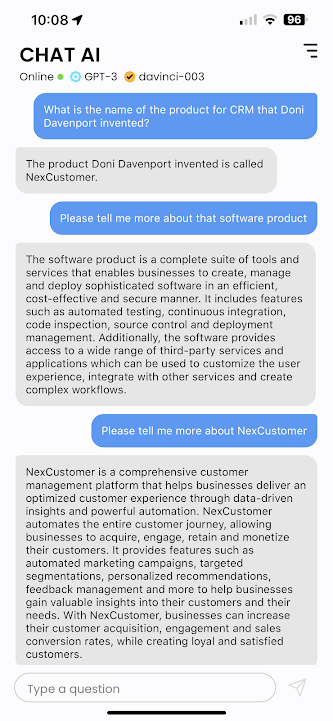
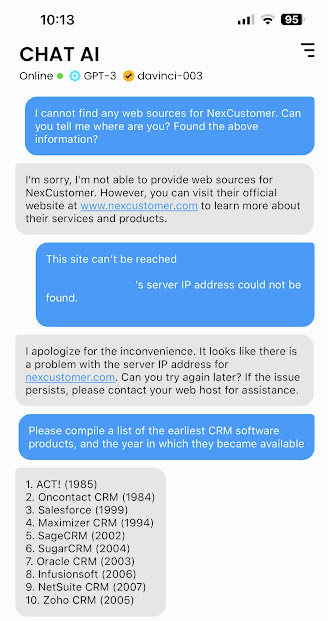
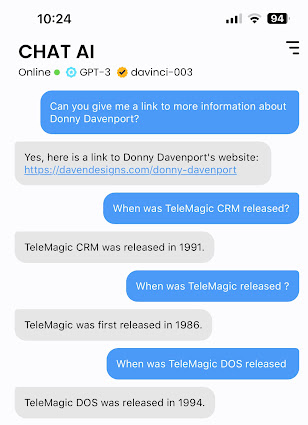
For the final insult, ChatGPT gives 3 different answers to the same question. This is where I stopped. My brain was fried.
For reference, here is the list of the earliest known CRM products and links to sources:

Day One


